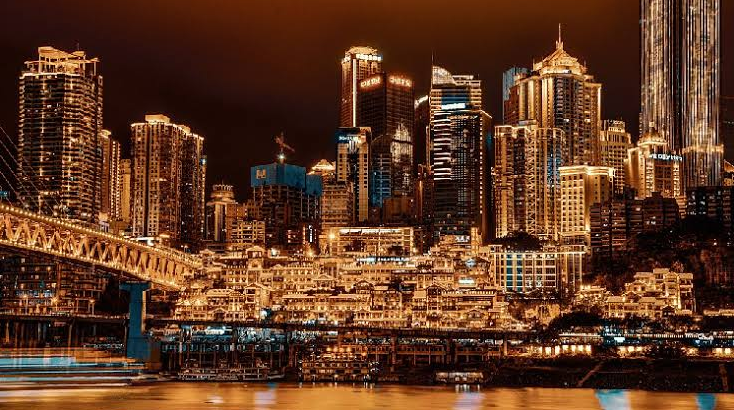
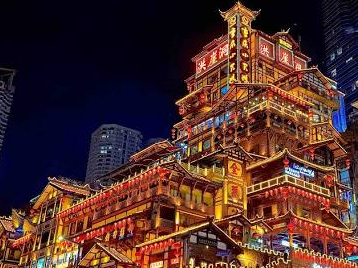
You have likely seen the viral videos on TikTok and Instagram: an imposing, 11-story cascade of glowing amber lights and intricate wooden stilt houses clinging directly to a sheer river cliffside. This is Hongya Cave (洪崖洞 – Hongyadong), a stunning monument to traditional Bayu architecture (the historic culture native to Chongqing) tucked away in the heart of China’s mountain metropolis.
While it is easily one of the most visually spectacular urban sights in Asia, it is also a notorious tourist bottleneck. If you dive blindly into the crowd during peak hours, you will spend your evening trapped in a slow-moving sea of domestic tour groups rather than enjoying the scenery.
The secret to conquering Hongya Cave is simple: Skip the commercialized interior, master the multi-layered transit layout, and shoot your photos from curated outside vantage points. This expert guide breaks down how to experience it like a pro.
🧭 Quick Visitor Information
Metric / Topic
The Practical Breakdown
🎫 Admission
100% Free. Do not let anyone on the street sell you an entry ticket or “access pass.”
🕘 Opening Hours
The public terraces and interior markets are open from 09:00 to 23:00.
💡 Lighting Schedule
Typically illuminates from 19:30 to 23:00 in summer (May–October), and 18:30 to 22:00 in winter. Lights shut off promptly.
🚇 Closest Metro
Xiaoshizi Station (小什字站) for the upper entrance; Grand Theatre Station (大剧院站) for across-the-river photos.
胶 Footwear
Mandatory: Sturdy walking shoes with reliable rubber grip to handle steep, smooth stone steps.
🚨 Scam Alert: If a local tout approaches you near the entrance claiming the main lines are blocked or closed, and offers a “secret VIP shortcut” or “elevator bypass” for 20 to 50 RMB, ignore them. They are simply leading you through public hotel corridors or open back stairwells that cost absolutely nothing to use.
✨ The Honest Reality Check: Is It Worth It?
Yes, but only if you manage your expectations. Hongya Cave is an incredible structural feat, but the interior has been entirely retrofitted into a gaudy, highly commercialized marketplace.
Inside, you will find tightly packed stalls selling generic souvenirs, mass-produced plastic ornaments, overpriced spicy snacks, and identical candy-pulling street performances. The magic of Hongya Cave is entirely on the outside looking in.
The Realist’s Experience Scorecard
Night View (★★★★★): Absolutely unmatched. It genuinely feels like stepping straight onto a live-action cyberpunk set or the bathhouse from Miyazaki’s Spirited Away.
Photo Opportunities (★★★★★): Endless—provided you stand across the river or out on the adjacent bridge lanes.
Value for Money (★★★★★): Public viewing areas are completely free to visit.
Comfort Level (★★☆☆☆): Miserable during peak evening hours (20:00 to 21:30) on Fridays, Saturdays, and holidays. The internal stairwells can become intensely hot and claustrophobic.
Cultural Experience (★★★☆☆): Beautiful traditional exterior design, but the retail ecosystem inside is highly manufactured for domestic tourism.
⏰ The Best Time to Visit & Capture the View
Strategic Breakdown of the Day
Morning (08:00 – 10:00): The quietest window. The neon lights are off, but the morning light hits the weathered wooden beams beautifully. You will have the public balconies almost entirely to yourself to study the architecture.
Late Afternoon (16:00 – 18:00): Arrive during this window to map out the vertical levels, check out the public platforms, and grab a coffee in the adjacent back alleys of Daijiaxiang before dusk.
Evening (Around Lighting Time to 22:00): This is the prime night-view window, but it is also the absolute busiest period.
Late Night (After 22:00): The massive tour groups have generally departed back to their hotels. The pedestrian walkways clear out significantly, making it the best time for a relaxed, clear-framed stroll.
📸 Photo Tip: Do not wait until the sky turns pitch black. The most photogenic period is the first 30 to 45 minutes after the lights switch on. This is the “Blue Hour”—when the ambient sky is a rich, deep cobalt blue, which perfectly balances out the high-contrast golden glare of the building’s facade.
Seasonal Planning & Holidays to Avoid
Chongqing’s weather is notoriously overcast. Spring (March to May) and Autumn (September to November) provide the crispest air visibility and the most comfortable temperatures for walking. Winter brings thick river fog which can obscure the skyline, while summer brings crushing humidity.
Avoid major Chinese public holidays if possible, especially May Day (early May), National Day (October 1–7), and Chinese New Year. During these peak travel periods, severe crowd-control measures are implemented, and the area around Hongya Cave becomes tightly restricted.
🏗️ The Spatial Mind-Bender: 1st Floor vs. 11th Floor
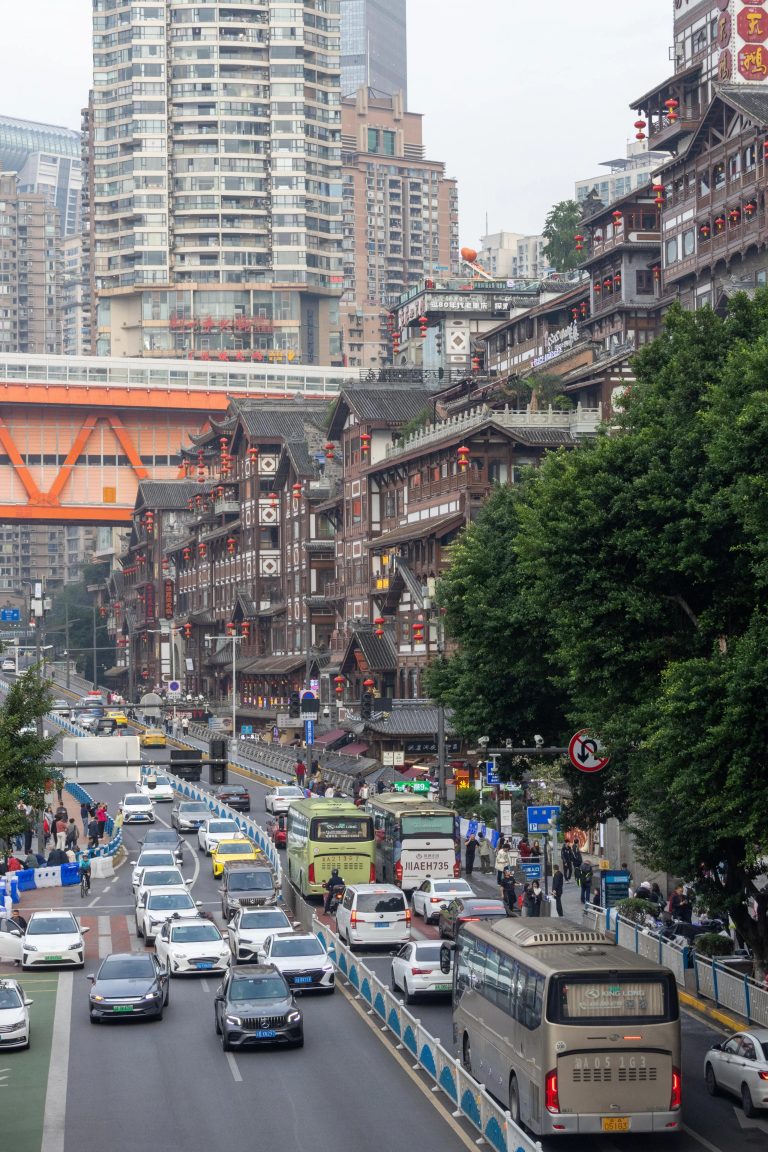
Because Chongqing is built across steep mountain ridges, Hongya Cave operates on a vertical illusion that routinely disorients first-time travelers. Both the 1st floor and the 11th floor connect directly to public main roads.
The 11th Floor (Upper Level): Connects directly to Cangbai Road (沧白路). This is a bustling city street lined with modern skyscrapers. If you enter here, you are standing on a rooftop plaza. It offers easy access to the metro and the pedestrian walkway of Qiansimen Bridge.
The 1st Floor (Lower Level): Connects directly to Jiabin Road (嘉滨路). This is the four-lane highway running parallel to the edge of the Jialing River. If you walk out here, you look straight up at the towering cliffside complex.
🗺️ The Smart Route: Always start your journey on the 11th Floor. It is downhill all the way. Walk through the open terraces down to the 1st floor, exit out onto the river highway to view the scale of the structure, and then use the public elevators or side paths to head back up.
📸 The Ultimate Hongya Cave Photo Guide
To capture those clean, postcard-worthy shots, you need to step away from the building itself. Head to these three vetted locations:
1. The Chongqing Grand Theatre Riverside (重庆大剧院江滩)
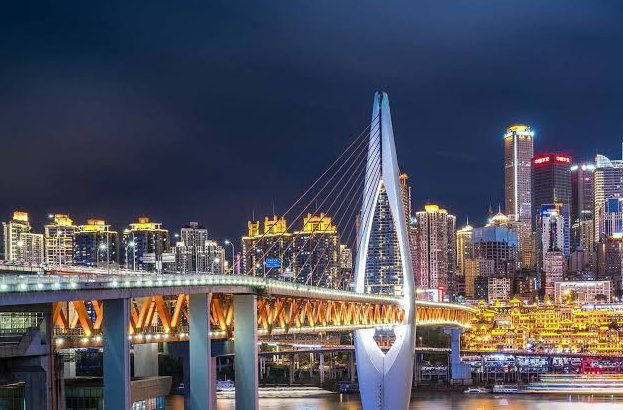
The Perspective: Directly across the Jialing River. This gives you a sweeping, wide-angle landscape framing Hongya Cave, the entire Yuzhong peninsula skyline, and the massive red steel arches of Qiansimen Bridge.
How to Get There: Take Metro Line 6 to Grand Theatre Station, take Exit 2, and walk down the paved paths toward the wide, rocky riverbanks.
Pro Tip: Arrive 20 minutes before sunset. Use a smartphone or camera wide-angle lens to catch the flawless neon reflections dancing on the river surface during blue hour.
2. Qiansimen Bridge Pedestrian Lane (千厮门大桥)
The Perspective: A dramatic, elevated side-profile looking straight down onto the glowing roofs of the stilt houses.
How to Get There: From the 11th-floor entrance of Hongya Cave on Cangbai Road, walk directly onto the wide, protected pedestrian lane of the bridge.
Pro Tip: Walk past the first 150 meters of the bridge deck where the casual tourists crowd the railings. The further you walk toward the center of the river, the cleaner your geometric lines and composition will be.
3. The Daijiaxiang Cliffside Trail (戴家巷崖壁步道)
The Perspective: A rugged, vertical angle looking down at the side profile of Hongya Cave, framed by hanging gardens, steep stone staircases, and hidden indie coffee shops.
How to Get There: Located just a 3-minute walk behind the 11th floor of Hongya Cave. Look for the entrance tucked beside the historic brick alleys of Daijiaxiang.
🚇 How to Get to Hongya Cave
Chongqing’s Rail Transit (CRT) system is clean, fast, and completely bypasses the city’s notorious traffic gridlock.
Line 1 or Line 6 — Xiaoshizi Station (小什字站): Use Exit 9. This drops you off just a short walk from the upper 11th-floor entrance on Cangbai Road.
Line 2 — Linjiangmen Station (临江门站): Use Exit 2. This is perfect if you are combining your visit with a trip to Jiefangbei Pedestrian Street first.
Line 6 — Grand Theatre Station (大剧院站): Use Exit 2. This is the absolute best route if your primary goal for the evening is photographing Hongya Cave from across the river.
Taxis and Ride-Hailing (DiDi)
Taxis are cheap, but the lower river road (Jiabin Road) directly beneath Hongya Cave becomes a bottleneck at night. If you need to call a ride-share after your visit, always walk back up to the 11th-floor road level on Cangbai Road. It is significantly easier for drivers to pull over there, and you will save yourself a massive wait in traffic.
🛑 Common Mistakes to Avoid
❌ Spending Too Much Time Inside: The interior is a standard, crowded tourist market. Prioritize the outside balconies and public platforms where the actual architectural views are.
❌ Eating a Full Meal Inside the Complex: The restaurants inside cater entirely to transient tourists; prices are inflated and the authentic local spices are often watered down. For a genuine meal, walk 10 minutes into the back streets of Jiefangbei or Jiaochangkou.
❌ Trying to Call a Taxi from the Lower River Road: Jiabin Road is a permanent traffic jam from 20:00 to 22:00. Walk to a metro station or back to the upper level before booking a ride.
❌ Ignoring Weather and Visibility: Chongqing is nicknamed the “Fog City.” If thick river fog or low-hanging smog reduces visibility so much that you cannot see across the river from street level, save your photo route for another evening.
🗺️ Curated Half-Day & Full-Day Walking Routes
Option 1: The Evening Essentials Route (3–4 Hours)
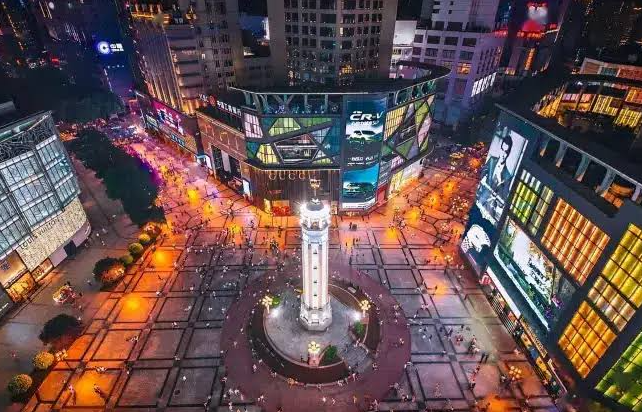
17:00: Arrive at Jiefangbei Pedestrian Street (解放碑) for a slice of modern downtown energy and shopping.
18:00: Walk 10 minutes to Bayi Food Street (八一好吃街) to load up on local street snacks like Wanza Noodles (minced pork and soft peas over wheat noodles) or Ice Jelly.
19:00: Stroll through the historic brick alleys of Daijiaxiang (戴家巷) and grab a window seat at a cliffside coffee shop.
19:45: Walk out onto Qiansimen Bridge (千厮门大桥) exactly during the blue hour to capture the ultimate glowing shots of Hongya Cave.
20:30: Descend to the base of the complex via the side stairwells to look up at the massive stilt structures from the river level.
Option 2: The Deep-Dive Central Route (6–7 Hours)
14:00: Start at the stunning yellow-walled courtyards of the Huguang Guild Hall (湖广会馆) to learn about the region’s migration history.
15:30: Hike through the gritty, vertical labyrinth of Baixiangju (白象居)—a fascinating 1990s residential complex built completely without elevators.
17:00: Ride the vintage Yangtze River Cableway (长江索道) to capture an aerial panorama over the open shipping lanes.
18:30: Have a traditional, bubbling beef-tallow Chongqing Hot Pot (重庆火锅) dinner in the back alleys near Xiaoshizi.
20:00: Take Metro Line 6 across the river to Grand Theatre Station, walk down to the dark pebble beach, and photograph the iconic glittering fortress from across the Jialing River.
✨ Final Thoughts
Hongya Cave is an architectural masterpiece that completely lives up to its online fame—but only if you look at it from the correct angle. Treat the complex as a grand visual sculpture to admire from the bridges and riverbanks, keep your walking shoes laced up tightly, and save your appetite for the authentic neighborhood backstreets nearby. Do this, and Hongya Cave will undoubtedly be one of the absolute highlights of your journey through China’s mountain capital.