5 Days in Chongqing: A First-Timer Itinerary

Last fact-checked: 15 June 2026
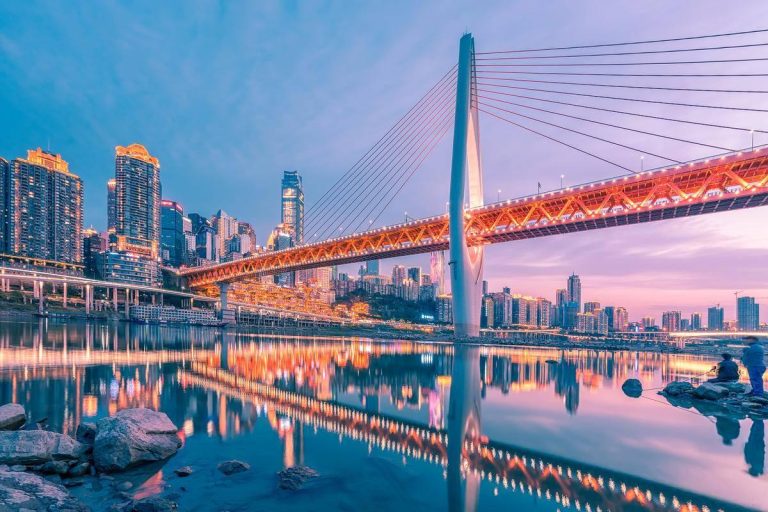
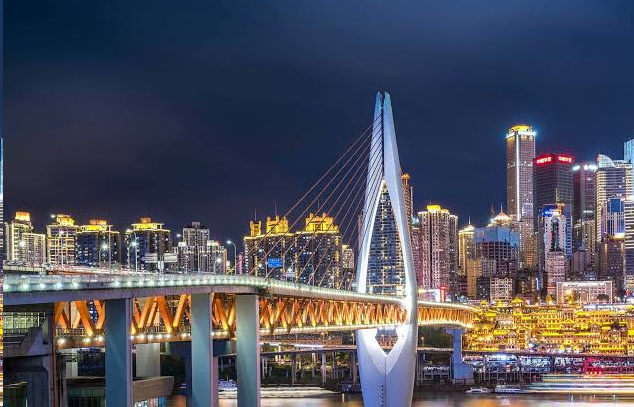
Five days is an excellent amount of time for a first visit to Chongqing (重庆). It gives you enough room to see the major city landmarks without turning every day into a race, try several styles of local food, explore both sides of the rivers, and take one worthwhile day trip.
This itinerary follows a simple structure:
- three days in central Chongqing;
- one day at Wulong (武隆) or the Dazu Rock Carvings (大足石刻);
- one slower final day for museums, historic sites and shopping.
The route is designed for independent international travelers. It accounts for Chongqing’s steep terrain, long metro transfers and the fact that places which appear close on a map may sit several levels apart.
Important: Opening hours, ticket packages, lighting schedules, train times and construction arrangements can change. Recheck official information shortly before each visit, especially during Chinese public holidays.
Is Five Days Right for You?
This itinerary works especially well for:
- first-time visitors who want both city sights and a day trip;
- food-focused travelers who do not want every meal squeezed between attractions;
- photographers who need flexibility around weather and evening light;
- couples, solo travelers and families comfortable with moderate walking;
- eligible transit passengers using China’s 240-hour visa-free transit policy.
Five days will not cover the whole Chongqing municipality. Wulong and Dazu are in different directions, and attempting both as separate day trips leaves too little time for the city. Choose one unless you add at least another day.
Visa-Free Transit Note
As of June 2026, China’s 240-hour visa-free transit policy covers eligible passport holders from 55 countries. Travelers must hold valid international travel documents and confirmed onward tickets to a third country or region.
For example, Paris → Chongqing → Bangkok may qualify, while Paris → Chongqing → Paris normally does not meet the transit requirement.
Eligibility depends on nationality, itinerary, entry point and current immigration rules. Confirm the latest requirements with China’s National Immigration Administration and your airline before departure. Carry your original passport during the trip, as hotels, ticket counters and other venues may ask to see it.
Where to Stay in Chongqing
For this itinerary, changing hotels is usually unnecessary. A five-day trip normally involves four nights, although some flight schedules require a fifth.
Best overall: Jiefangbei or Jiaochangkou (解放碑 / 较场口)
This is the most practical base for a first visit. The area is close to:
- Jiefangbei Pedestrian Area (解放碑步行街);
- Bayi Food Street (八一路好吃街);
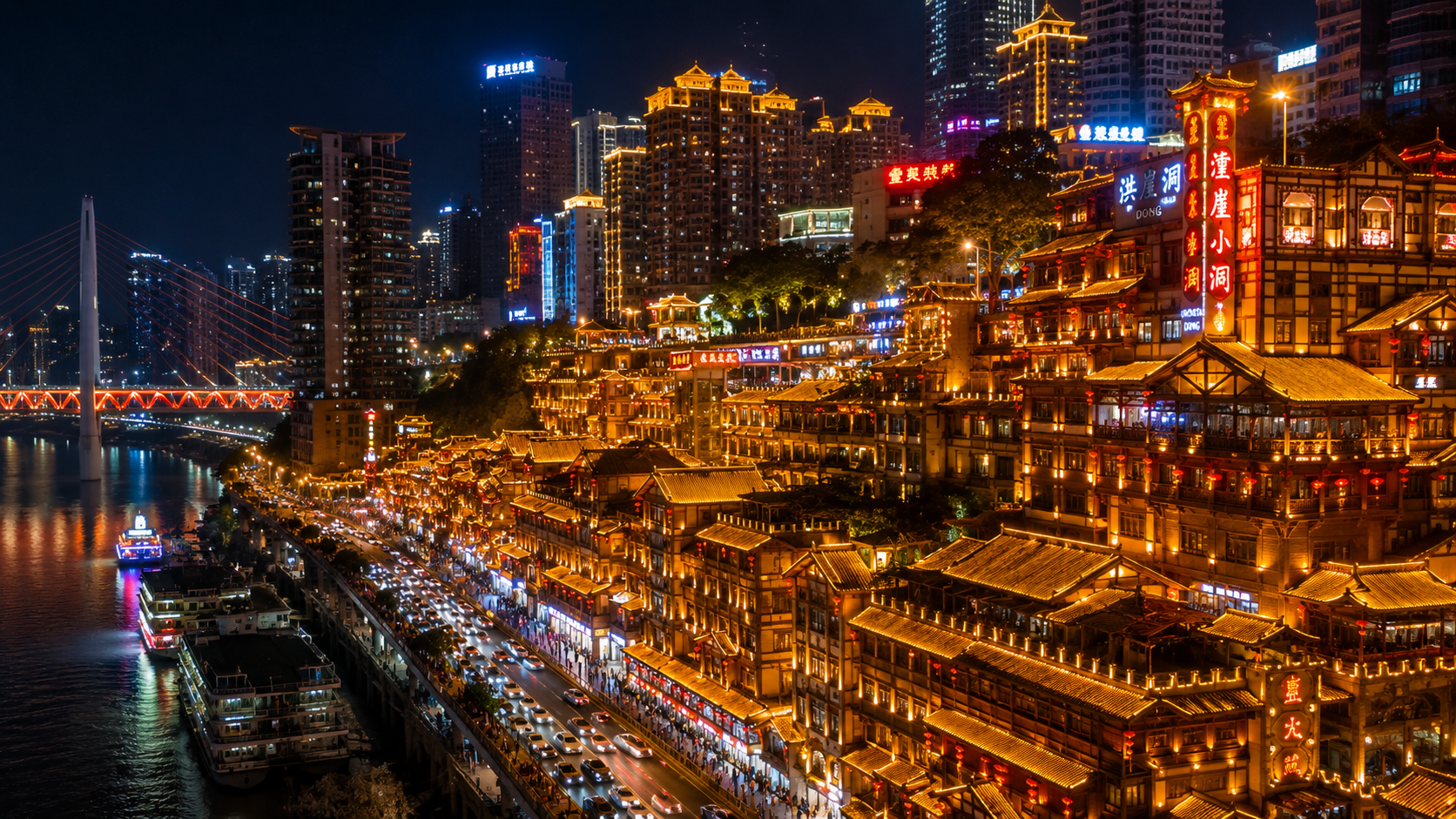
- Hongyadong / Hongya Cave (洪崖洞);
- Shibati Traditional Scenic Area (十八梯);
- the Yangtze River Cableway (长江索道);
- Lines 1, 2, 6 and other useful transport connections.
Jiaochangkou (较场口) is often a better compromise than a room directly beside Jiefangbei: it remains central but can be quieter and better value.
Best for nightlife: Guanyinqiao (观音桥)
Guanyinqiao (观音桥) is a major shopping and dining area with easy access to Jiujie (九街). It suits younger travelers and anyone who values nightlife over walking access to the historic center.
The trade-off is additional travel time to Yuzhong District (渝中区).
Best for river views: Nanbin Road (南滨路)
Hotels along Nanbin Road (南滨路) face the Yuzhong Peninsula (渝中半岛) skyline. This is a good option for couples and photographers, but some properties are far from metro entrances. Check the exact walking route and elevation before booking.
What to check before reserving a hotel
Do not judge a Chongqing hotel by straight-line distance alone. Confirm:
- the nearest usable metro entrance;
- whether the walk includes steep steps;
- the building level of the lobby;
- whether taxis can stop at the entrance;
- whether the room genuinely has the advertised river or skyline view;
- whether foreign guests can be registered.
Hotel prices vary significantly by date. Chinese public holidays, major exhibitions and summer weekends can raise rates quickly.
Five-Day Route at a Glance
| Day | Theme | Main stops | Pace |
|---|---|---|---|
| Day 1 | Arrival and city center | Jiefangbei, Bayi Food Street, cableway, Longmenhao, Hongyadong | Moderate |
| Day 2 | Classic Chongqing | Ciqikou, Liziba, Shibati or Mountain City Lane, hot pot | Active |
| Day 3 | Museums, creative spaces and local nightlife | Three Gorges Museum, Eling, Guanyinqiao, Jiujie or Nanbin Road | Moderate |
| Day 4 | World Heritage day trip | Wulong Three Natural Bridges or Dazu Rock Carvings | Full day |
| Day 5 | Slow Chongqing | Luohan Temple or Huguang Guild Hall, local shopping and departure | Easy |
Move the day-trip day when necessary. Wulong is more weather-sensitive than Dazu, while the museum is usually the easiest stop to move to a rainy day.
Day 1: Arrival, the Cableway and Hongyadong at Night
This schedule assumes you reach your central hotel by early afternoon. Travelers arriving later should remove the cableway or Longmenhao rather than rushing.
14:00 — Arrive and Check In
Chongqing Jiangbei International Airport (重庆江北国际机场) is linked to the city by Metro Line 10.
For hotels near Xiaoshizi (小什字) and Hongyadong (洪崖洞), one practical route is Line 10 to Hongtudi (红土地), then Line 6.
For hotels near Jiaochangkou (较场口), Line 10 to Qixinggang (七星岗), followed by Line 1, may be more convenient.
A taxi can be easier with luggage, but road journey times vary. Save the hotel’s Chinese name, address and phone number before leaving the airport.
15:30 — Jiefangbei Pedestrian Area (解放碑步行街)
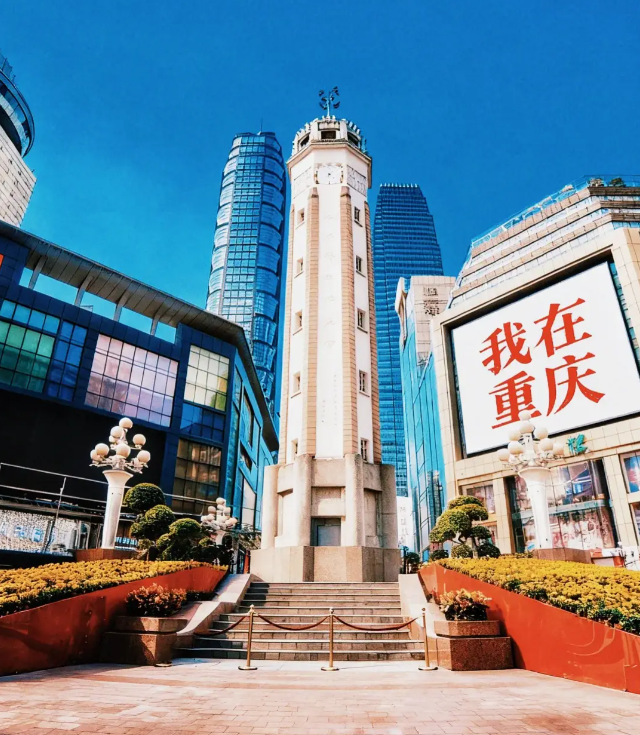
Begin at the People’s Liberation Monument, usually called Jiefangbei (解放碑). The monument stands among shopping centers and high-rise buildings in the commercial heart of central Chongqing.
This is a short orientation stop rather than a major historical visit. Use it to understand the neighborhood and confirm the route back to your hotel.
Allow: 30 minutes.
16:00 — Bayi Food Street (八一路好吃街)
Bayi Food Street is useful for a first introduction to Chongqing snacks. It is commercial and busy, but the concentration of stalls makes ordering several small dishes easy.
Try two or three of the following:
- hot-and-sour sweet potato noodles (酸辣粉);
- wandou zajiang noodles with peas and minced meat (豌杂面);
- grilled sweet potato sheet (烤苕皮);
- ice jelly with brown sugar syrup (冰粉);
- sweet rice dumplings (山城小汤圆).
Ask for wēi là (微辣) for mildly spicy food. Visitors with a low tolerance should also show the phrase “少放辣椒”, meaning “use less chili.”
Do not eat a full dinner here if you plan a proper meal on the south bank.
17:00 — Yangtze River Cableway (长江索道)
Walk or take a short ride to the North Station on Xinhua Road (新华路). The cableway crosses the Yangtze River (长江) to Shangxinjie (上新街).
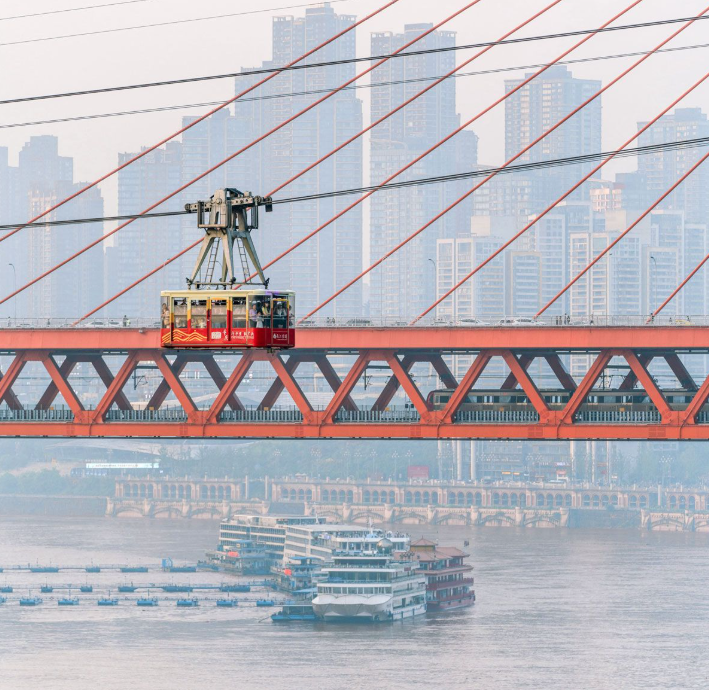
The crossing itself takes only a few minutes, but queues can be much longer.
Current practical information
- The officially regulated maximum fare is RMB 30 one way and RMB 50 return.
- Operating hours generally run later from March to November than during winter.
- Public-holiday schedules may be extended.
- Strong wind, maintenance or operational issues can cause temporary suspension.
A one-way ticket is the logical choice for this route.
International travelers may find Trip.com easier than Chinese-language booking channels. Keep your passport and ticket QR code available.
When the queue becomes excessive, take Metro Line 6 across the river instead and save the cableway for another day. A five-day trip gives you that flexibility.
17:45 — Longmenhao Old Street (龙门浩老街)
Longmenhao Old Street is close to the cableway’s South Station. Restored hillside buildings, terraces and river views make it a comfortable place for an early dinner.
Come for:
- the view toward Yuzhong District (渝中区);
- photographs of the cableway above the old street;
- tea or coffee on a terrace;
- a quieter meal before the night-view crowds.
Dinner options
Choose Chongqing noodles (重庆小面), home-style dishes (家常菜) or jianghu cuisine (江湖菜) if you want a reasonably quick meal.
A full Chongqing hot pot (重庆火锅) dinner can take two hours, so it is better saved for Day 2.
19:15 — Grand Theatre Riverfront (重庆大剧院江滩)
Take Metro Line 6 from Shangxinjie (上新街) to Grand Theatre Station (大剧院站).
The riverfront near Chongqing Grand Theatre (重庆大剧院) provides a wide view across the Jialing River (嘉陵江), including:
- Hongyadong (洪崖洞);
- Qiansimen Bridge (千厮门大桥);
- the central skyline;
- reflections on the water.
Arrive before the lights come on. Hongyadong’s lighting time changes seasonally and may be adjusted temporarily. Summer lighting begins later than winter lighting, so check the official Hongyadong account on the day of your visit.
Safety
Lower riverbank areas may be dark, wet or closed when water levels rise. Remain on open public paths and do not climb onto rocks or barriers for photographs.
20:15 — Hongyadong / Hongya Cave (洪崖洞)
Continue by metro, taxi or on foot across Qiansimen Bridge when pedestrian access is open.
Hongyadong is free to enter. Its interior contains shops, restaurants and entertainment venues, but the strongest views are usually outside.
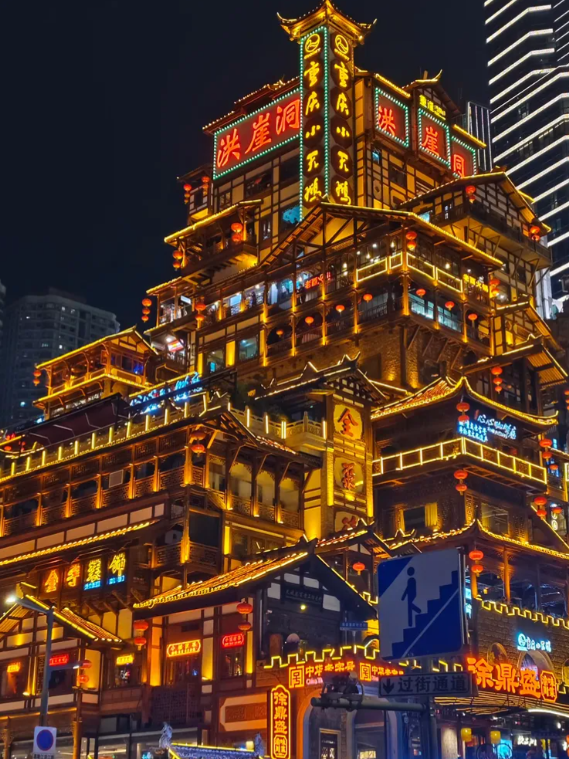
Understanding the layout
Both Level 1 and Level 11 connect to roads because the complex is built against a steep hillside.
- Level 1: close view from the riverside road; usually the most crowded area.
- Level 11: access from Cangbai Road (沧白路); more practical for leaving and reaching the bridge.
Ignore unofficial sellers offering a “secret” or “express” entrance. Follow official signs and crowd-control instructions.
Day 2: Ciqikou, Liziba and the Old City
Day 2 has the most walking. Wear shoes with reliable grip and avoid scheduling a late night if you plan the Wulong trip the next morning.
08:00 — Ciqikou Ancient Town (磁器口古镇)
Take Line 1 to Ciqikou Station (磁器口站).
Ciqikou developed around river trade and is now a restored commercial old town. It is most enjoyable before tour groups fill the main lanes.
Explore the main street briefly, then move into side lanes and toward the river if access is open.
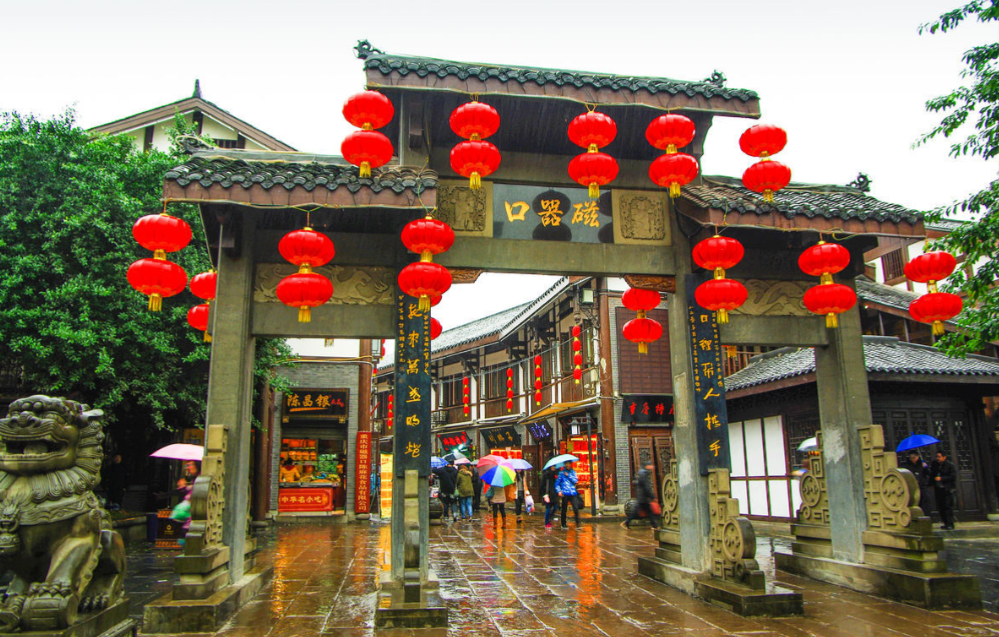
Good morning choices include:
- Chen mahua, a crunchy twisted pastry (陈麻花);
- hot douhua, soft tofu with savory seasoning (热豆花);
- glutinous rice cake (糍粑);
- Chongqing noodles (重庆小面);
- covered-bowl tea (盖碗茶).
Ciqikou is not an untouched ancient settlement. It is a popular tourism district with many souvenir stores. Its value lies in the street pattern, tea-house culture and early-morning atmosphere rather than complete historical authenticity.
Allow: 2–2.5 hours.
10:45 — Travel to Liziba Station (李子坝站)
Take Line 1 to Daping Station (大坪站), change to Line 2, and continue to Liziba.
Line 2 is a straddle-beam monorail. Try to stand near a window for the elevated ride.
11:30 — Liziba Monorail Viewpoint (李子坝轻轨穿楼观景平台)
At Liziba, trains pass through a purpose-built opening in a commercial-residential structure. Ride through the station first, then walk to the public viewing platform below.
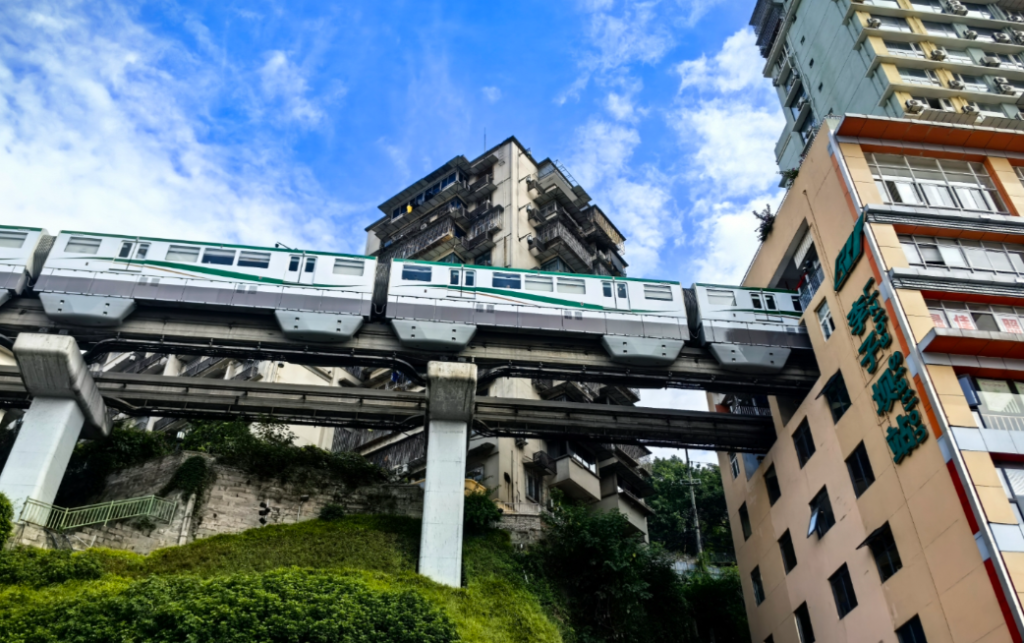
The platform is free and provides the familiar photograph of the train entering the building.
2026 construction notice
Renovation work at Liziba Station began a new phase on 16 June 2026. Parts of the platforms, station halls and exits are being closed in stages through late 2026.
The station remains operational, but old online exit instructions may be wrong. Follow current station signs and staff directions.
Stay within the designated viewing area and never step into the road for a photograph.
Allow: 45–60 minutes.
12:45 — Lunch near Daping or Central Chongqing
Returning immediately to Jiefangbei is not essential. Daping (大坪) has practical neighborhood restaurants and can be less crowded.
Good lunch choices include:
- wandou zajiang noodles (豌杂面);
- pork trotter soup (蹄花汤);
- twice-cooked pork (回锅肉);
- simple home-style dishes (家常菜).
Keep lunch moderate if hot pot is planned for dinner.
14:15 — Choose Shibati or Mountain City Lane
Do not force both into the same afternoon.
Option A: Shibati Traditional Scenic Area (十八梯)
Choose Shibati when you prefer:
- convenient access from Jiaochangkou (较场口);
- restored architecture;
- cafés and frequent rest stops;
- a shorter and more organized visit.
Shibati is polished and commercial, but it gives a clear sense of the stairways that historically connected different levels of the city.
Option B: Mountain City Lane (山城巷)
Choose Mountain City Lane when you prefer:
- a longer hillside walk;
- older neighborhood textures;
- uneven stone paths and river views;
- a less formal atmosphere.
The exact route includes slopes, stairs and level changes. It should not be described as entirely downhill, and surfaces can become slippery after rain.
Allow: 1–1.5 hours.
17:30 — Chongqing Hot Pot Dinner (重庆火锅)
A first hot pot meal is easier with a few basic choices.
Choose the broth
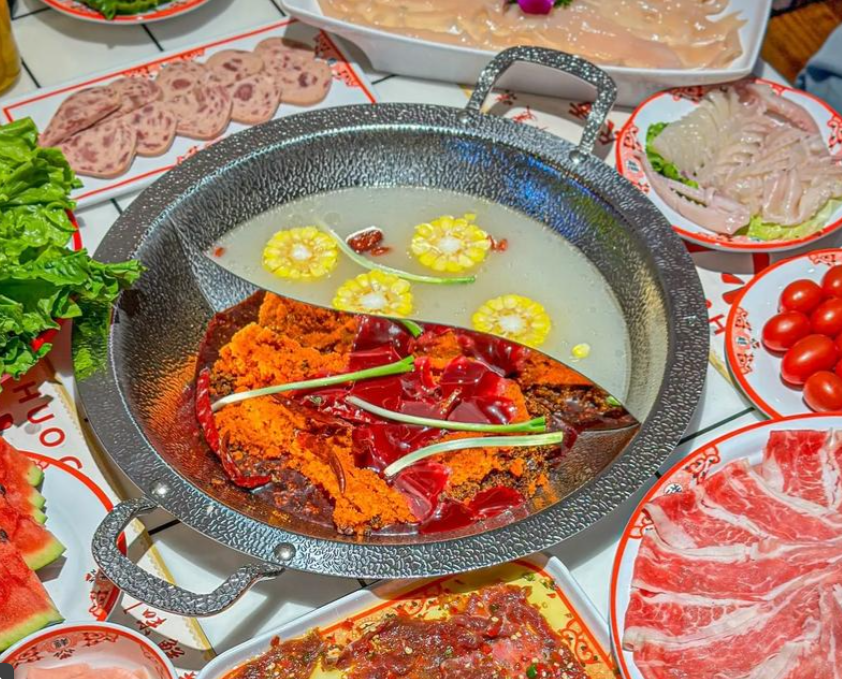
Order a split pot, called yuānyāng guō (鸳鸯锅), for both spicy and non-spicy broth. Request wēi là (微辣) for the lowest common spice level, although it may still feel hot.
Start with fewer dishes
Common ingredients include:
- fresh beef (鲜牛肉);
- tripe (毛肚);
- duck intestine (鸭肠);
- lotus root (藕片);
- tofu skin (豆皮);
- mushrooms (菌菇);
- fried pork (酥肉).
Restaurants often serve dishes for sharing. Ask about portion sizes before ordering.
Use restaurant lists carefully
The original local draft mentioned restaurants including Ding Niangniang Hot Pot (丁孃孃火锅), Xuan Hot Pot (煊火锅) and Dong Yanjing Hot Pot (董眼镜火锅). These may be useful starting points, but branches, operating hours and queues change.
Confirm the exact location in Amap (高德地图) and read recent reviews rather than choosing a similarly named branch offered by a street promoter.
Evening — Keep It Flexible
Choose one low-pressure activity:
- a Two Rivers Night Cruise (两江夜游);
- a drink in Jiujie (九街);
- a quiet walk near your hotel;
- an early night before the day trip.
Night-cruise routes, vessels, piers and seating arrangements vary. Confirm the departure pier and ticket inclusions before payment.
Day 3: Museums, Creative Spaces and Local Nightlife
Day 3 is deliberately easier than Day 2. It also works well as a bad-weather day.
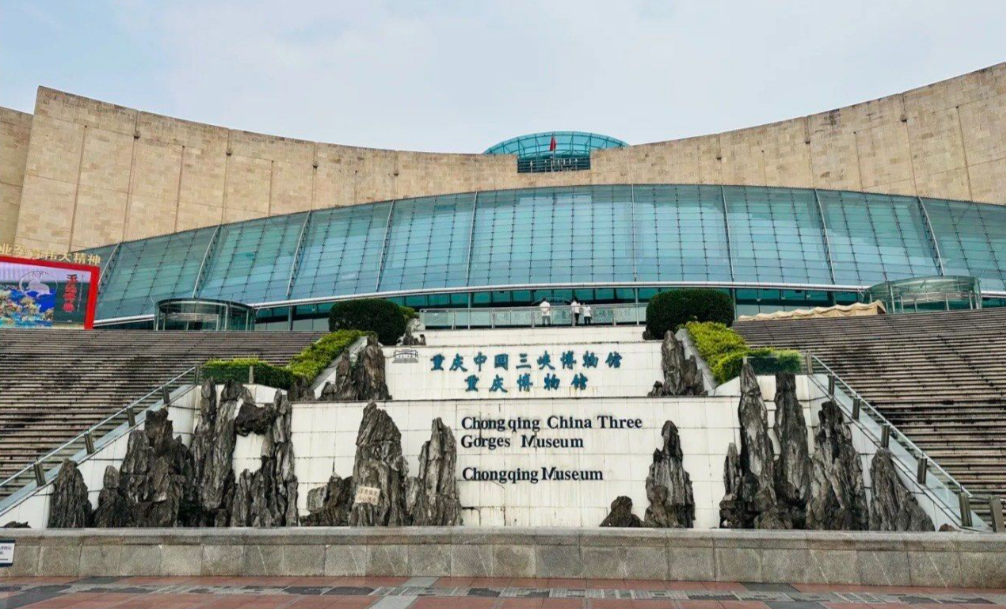
09:30 — Chongqing China Three Gorges Museum (重庆中国三峡博物馆)
The Three Gorges Museum covers the history, archaeology and culture of Chongqing and the Three Gorges region.
As of the latest official update:
- general entry to the main museum is free;
- normal advance reservations were removed in October 2025;
- visitors should carry a valid identity document or passport;
- regular hours are 09:00–17:00;
- the museum is normally closed on Mondays, with possible holiday exceptions.
Crowd limits may still be introduced on busy days. Check the official account before visiting.
Allow: 1.5–2 hours.
11:30 — People’s Great Hall Exterior (重庆市人民大礼堂)
The People’s Great Hall stands across the square from the museum. Its design draws on traditional Chinese architectural forms and is easy to photograph from the public square.
The exterior is enough for most visitors on a five-day itinerary. Interior access depends on events and current opening arrangements.
12:15 — Lunch
Eat near Qixinggang (七星岗), Daping (大坪) or Eling (鹅岭), depending on your next stop.
This is a good day to try jianghu cuisine (江湖菜), a broad category of bold, informal local dishes.
Typical choices include:
- laziji, dry-fried chicken with chilies (辣子鸡);
- maoxuewang, a spicy mixed stew (毛血旺);
- stir-fried river fish (江湖鱼);
- pork trotter soup (蹄花汤).
Portions can be large. Two people rarely need several full-size main dishes.
14:00 — Eling Park or Eling Testbed 2
These are close enough to combine, but travelers with limited energy should choose one.
Eling Park (鹅岭公园)
Eling Park sits on a ridge between the rivers. Kansheng Tower (瞰胜楼) offers wide city views when visibility is good.
Do not pay for a city view without checking the weather first. Chongqing is often hazy or foggy.
Eling Testbed 2 (鹅岭二厂文创公园)
Testbed 2 occupies a former printing complex and now contains cafés, studios and small shops.
The main appeal is the mix of industrial architecture and city views. Some rooftops or interior spaces may charge admission or close for private events.
The walk from Eling Metro Station can be steep. A short taxi ride may save energy.
Allow: 1–2 hours depending on your choice.
16:30 — Guanyinqiao Food Street (观音桥好吃街)
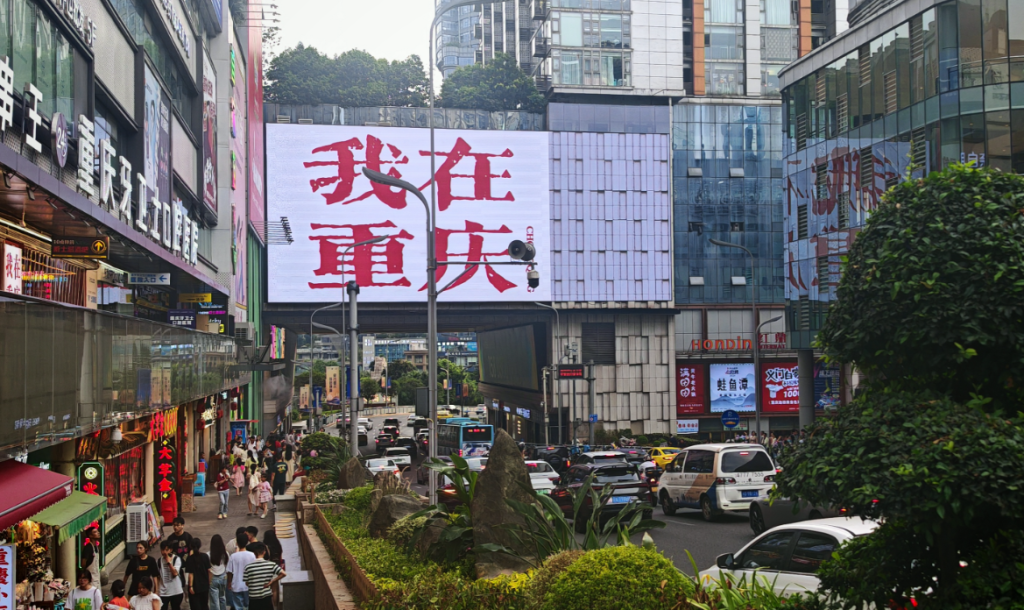
Guanyinqiao is a modern commercial district used by local residents as well as visitors.
Its food-street complexes are not hidden local secrets, but they offer a wide range of snacks in one place.
Try:
- oil tea with crispy rice and savory toppings (油茶);
- rice cake cooked in a small iron mold (熨斗糕);
- spicy potatoes (丁家坡洋芋);
- grilled tofu skin (烤豆干);
- grilled sweet potato sheet (烤苕皮).
Fish mint, called zhe’ergen (折耳根), has a strong herbal flavor. Order a small portion before adding it to a larger dish.
Evening — Jiujie or Nanbin Road
Option A: Jiujie nightlife (九街)
Jiujie has bars, music venues and late-night restaurants. Carry your passport and use an official taxi or established ride-hailing service for the return journey.
Option B: Nanbin Road river walk (南滨路)
Nanbin Road offers a broad view toward the Yuzhong Peninsula (渝中半岛). It is a good choice for a quiet walk after several crowded attractions.
Remember that Nanbin Road is primarily a Yuzhong skyline viewpoint. For a direct wide view of Hongyadong, the Grand Theatre riverfront is better.
Day 4: Choose Wulong or the Dazu Rock Carvings
Both destinations are UNESCO World Heritage sites, but they offer very different experiences.
Choose Wulong for karst scenery and a longer outdoor walk. Choose Dazu for art, history and a less physically demanding day.
Option A: Wulong Three Natural Bridges (武隆天生三桥)
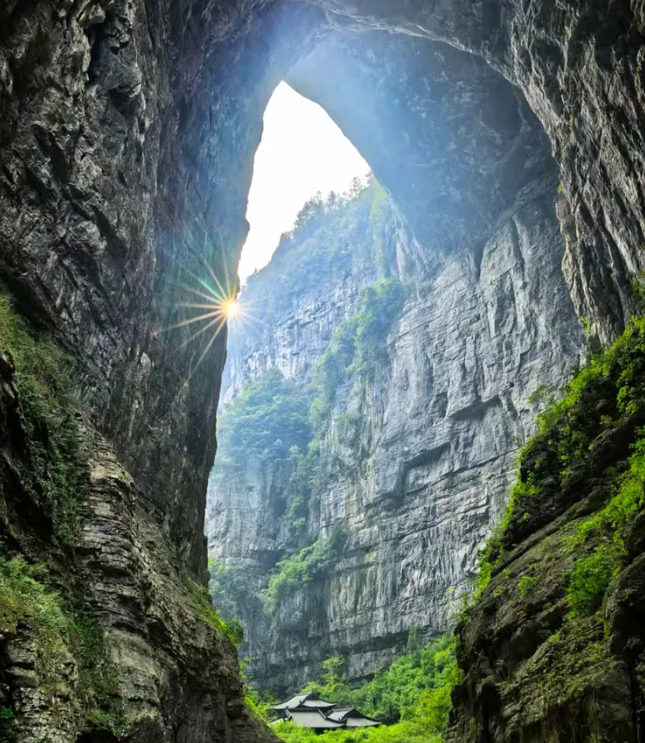
Wulong Karst is part of the UNESCO-listed South China Karst. The component is recognized for giant sinkholes, natural bridges and caves.
The Three Natural Bridges route descends into a deep limestone landscape beneath Tianlong Bridge (天龙桥), Qinglong Bridge (青龙桥) and Heilong Bridge (黑龙桥).
The current rail route
The most important correction to older Chongqing itineraries is the opening of the high-speed line from Chongqing East Railway Station (重庆东站).
Use:
Chongqing East (重庆东站) → Wulong South (武隆南站)
The fastest central-Chongqing-to-Wulong rail journeys are now around 40 minutes, although the full day remains long because you must still reach Chongqing East, wait for the train and transfer from Wulong South to the scenic area.
Direct ground connections operate between Wulong South and local destinations, but departure times and routes can change. Confirm the current connection after buying the rail ticket.
Do not move hotels to Chongqing North Railway Station (重庆北站) for this trip. That advice is based on the older conventional-rail route.
Suggested day structure
Early morning: Travel from your hotel to Chongqing East Railway Station.
Morning: High-speed train to Wulong South.
Late morning: Transfer to the Xiannüshan Tourist Center (仙女山游客中心) or the current scenic-area entry point.
Midday to afternoon: Walk the Three Natural Bridges route.
Late afternoon: Return to Wulong South with a generous buffer.
Evening: Train back to Chongqing.
Train times change by date. Use China Railway 12306 (铁路12306) or Trip.com for the exact schedule.
Official seasonal opening pattern for 2026
The Wulong district government lists the following hours for Three Natural Bridges:
- 1–31 May: 08:30–17:00;
- 1 June–31 August: 08:00–17:00;
- 1 September–30 April: 08:30–16:30.
Weather, public holidays and safety measures may affect access.
Ticket structures and promotional passes change. Confirm the current package and whether it includes scenic transport before paying.
What the walk involves
The standard route includes:
- a major descent;
- paved valley-floor paths;
- steps and ramps;
- wet or slippery surfaces;
- several hours away from convenient transport.
Bring:
- shoes with strong grip;
- a light rain jacket;
- a warm layer;
- drinking water;
- mosquito repellent in warm months;
- a waterproof phone cover.
The valley can feel cooler than central Chongqing.
Who should reconsider Wulong?
Choose Dazu or remain in the city when:
- you have significant knee or mobility problems;
- wet steps are difficult;
- you dislike early starts and multi-stage transfers;
- severe weather is forecast;
- your return train leaves little margin.
Age alone is not the deciding factor. Mobility and confidence on steps matter more.
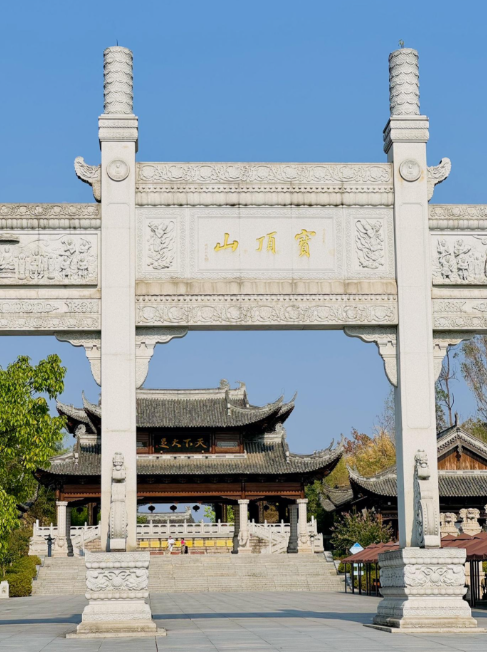
Option B: Dazu Rock Carvings (大足石刻)
The Dazu Rock Carvings are a series of cliffside carvings dating mainly from the 9th to the 13th century.
UNESCO highlights their artistic quality, wide range of religious and secular subjects, and the way they bring together Buddhist, Taoist and Confucian traditions.
For a one-day visit, focus on Baodingshan (宝顶山). Add Beishan (北山) only when transport and opening times make it realistic.
Why choose Dazu?
Dazu is the better option for:
- art and history enthusiasts;
- travelers interested in religion and everyday life in medieval China;
- families who prefer less demanding terrain;
- visitors travelling during poor visibility;
- travelers who want an English-speaking guide to add context.
The paths are generally more manageable than the Wulong valley route, but the site is not completely step-free.
Tickets
The current official Chongqing scenic-area list publishes the following standard prices:
| Ticket | Peak-season price | Off-season price |
|---|---|---|
| Baodingshan (宝顶山) | RMB 115 | RMB 100 |
| Beishan (北山) | RMB 70 | RMB 50 |
| Combined ticket | RMB 140 | RMB 120 |
Check which seasonal rate applies and whether any internal transport is separate.
Transport
Dazu is reachable independently, but the final transfer to Baodingshan can make the day less straightforward than the rail distance suggests.
Practical options include:
- a licensed organized day tour;
- a private driver shared by two to four travelers;
- intercity bus or rail followed by local bus or taxi;
- travelling to Dazu urban area and using local Bus 205 toward Baodingshan, subject to current service.
A guided tour has more value at Dazu than at many scenic sites because the carvings contain complex narratives and inscriptions.
Responsible photography
- Do not touch the carvings.
- Follow current rules on flash and tripods.
- Do not block narrow viewing paths.
- Respect barriers and conservation closures.
- Avoid making claims about the meaning of a scene unless the interpretation is supported by site information or a qualified guide.
Wulong or Dazu: Quick Decision
| Your priority | Better choice |
|---|---|
| Dramatic natural scenery | Wulong (武隆) |
| Religious art and history | Dazu (大足) |
| Easier walking day | Dazu |
| Landscape photography | Wulong |
| Poor long-distance visibility | Dazu |
| Strong knees and outdoor interests | Wulong |
| Family trip with mixed mobility | Usually Dazu |
| Minimal planning | Licensed guided tour to either site |
Day 5: Slow Chongqing and Departure
Keep the final day adaptable to your flight time. Do not place a non-refundable attraction immediately before an international departure.
09:30 — Choose One Cultural Stop
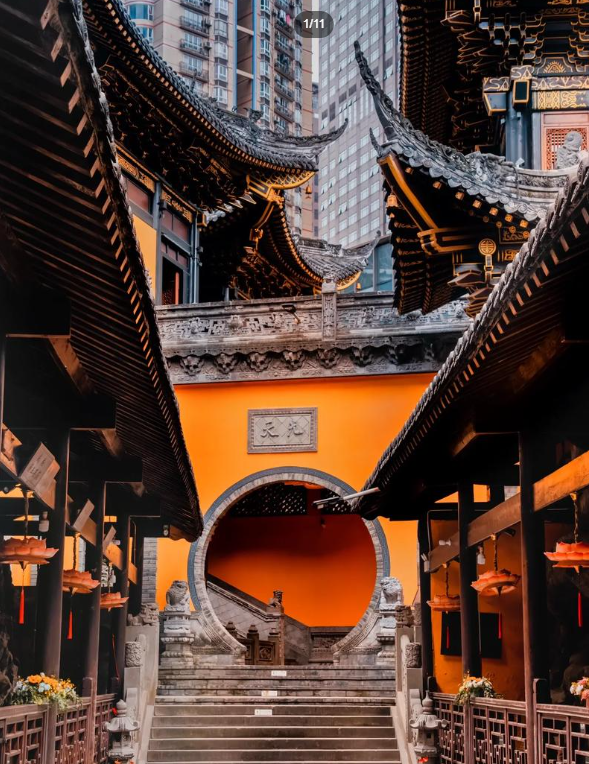
Option A: Luohan Temple (罗汉寺)
Luohan Temple sits among high-rise buildings near the central business district. It is a compact stop that shows one of Chongqing’s most striking contrasts between old religious architecture and the modern city.
Dress respectfully and avoid photographing worshippers at close range.
Option B: Huguang Guild Hall (湖广会馆)
Huguang Guild Hall is a historic architectural complex connected with migration to Sichuan and Chongqing.
Choose it if you want more historical context and have enough time for a paid visit. Confirm current opening hours and exhibition access before travelling.
Option C: Chongqing Zoo (重庆动物园)
Families may prefer the zoo, particularly for the giant pandas (大熊猫).
Go early, when animals may be more active and temperatures are lower. Allow more time than for the temple or guild hall and check the departure route before committing.
11:30 — Lunch
Use the final lunch to fill a gap in your food list.
Less-spicy choices
- pork trotter soup (蹄花汤);
- steamed egg (蒸蛋);
- tomato broth hot pot (番茄锅);
- plain rice and vegetables (米饭 / 时蔬);
- sweet rice dumplings (小汤圆).
Final spicy meal
Choose Chongqing noodles (重庆小面), jianghu cuisine (江湖菜) or hot pot only when you have enough time and easy access to your luggage.
13:00 — Souvenir Shopping
The easiest places to buy food gifts are reputable supermarkets and established specialty stores.
Look for:
- packaged hot pot base (火锅底料);
- Fuling preserved mustard stem (涪陵榨菜);
- Jiangjin rice candy (江津米花糖);
- packaged Chen mahua (陈麻花);
- tea and museum-designed gifts.
Check food-import rules at your destination. Products containing meat may be restricted or prohibited.
Avoid buying unsealed food for an international flight. Check production dates, ingredients and storage instructions.
15:00 — Collect Luggage and Leave for the Airport
Allow more time than the navigation app’s fastest estimate.
Confirm:
- T2, T3A or T3B;
- domestic or international departure;
- the airline’s check-in deadline;
- whether checked luggage must be collected and rechecked;
- current weather and road conditions.
Metro Line 10 is usually the most predictable airport connection. A taxi may be easier with luggage but can be delayed by traffic.
What to Eat During Five Days in Chongqing
Chongqing Hot Pot (重庆火锅)
The classic red broth uses beef tallow, chili and Sichuan pepper. A split pot (鸳鸯锅) is the most practical introduction for mixed groups.
Chongqing Noodles (重庆小面)
These noodles are seasoned with chili oil, Sichuan pepper, soy sauce, garlic and preserved vegetables. Wandou zajiang noodles (豌杂面) add peas and minced-meat sauce.
Jianghu Cuisine (江湖菜)
Jianghu cuisine is a broad category of bold, informal dishes rather than one fixed recipe. Expect strong seasoning and portions designed for sharing.
Snacks Worth Trying
- hot-and-sour noodles (酸辣粉);
- ice jelly (冰粉);
- grilled sweet potato sheet (烤苕皮);
- oil tea (油茶);
- iron-mold rice cake (熨斗糕);
- sweet rice dumplings (山城小汤圆);
- Chen mahua (陈麻花).
Spice Vocabulary
| English | Chinese |
|---|---|
| Not spicy | 不要辣 |
| Use less chili | 少放辣椒 |
| Mildly spicy | 微辣 |
| Very mildly spicy | 微微辣 |
| Split hot pot | 鸳鸯锅 |
| No Sichuan pepper | 不要花椒 |
A dish may contain chili oil even when it does not look particularly red. Mention allergies clearly rather than relying on “not spicy.”
Getting Around Chongqing
Useful metro stations
| Place | Chinese | Station |
|---|---|---|
| Jiefangbei | 解放碑 | Linjiangmen (临江门), Jiaochangkou (较场口) or Xiaoshizi (小什字) |
| Hongyadong | 洪崖洞 | Xiaoshizi (小什字) |
| Cableway North Station | 长江索道北站 | Xiaoshizi (小什字) |
| Ciqikou Ancient Town | 磁器口古镇 | Ciqikou (磁器口), Line 1 |
| Liziba Station | 李子坝站 | Liziba (李子坝), Line 2 |
| Eling Park / Testbed 2 | 鹅岭公园 / 鹅岭二厂 | Eling (鹅岭), Line 1 |
| Guanyinqiao | 观音桥 | Guanyinqiao (观音桥), Lines 3 and 9 |
| Three Gorges Museum | 重庆中国三峡博物馆 | Great Hall (大礼堂), Line 10 |
| Longmenhao | 龙门浩老街 | Shangxinjie (上新街), Line 6 |
| Chongqing East Railway Station | 重庆东站 | Check the current rail-transit connection in your map app |
Navigation
Amap / Gaode Maps (高德地图) and Baidu Maps (百度地图) generally provide better local routing than overseas map platforms.
In Chongqing, always check:
- the entrance number;
- the road name;
- the vertical level;
- whether the route includes stairs;
- whether a taxi pickup point is above or below you.
Payments
Alipay (支付宝) supports many payments with international bank cards. Set it up before arrival and keep a physical card or some cash as backup.
Transport QR-code activation and identity verification can vary by account.
Train tickets
Use China Railway 12306 (铁路12306) or Trip.com.
Book Day 4 rail travel as soon as tickets become available for busy weekends or public holidays. Use the exact station names:
- Chongqing East (重庆东);
- Wulong South (武隆南);
- Chongqing West (重庆西);
- Dazu South (大足南), when relevant.
Do not assume that every train leaves from Chongqing North.
Budget Planning
Costs change by season, so use the following as planning ranges rather than fixed prices.
Typical four-night trip
| Category | Budget approach | Comfortable approach |
|---|---|---|
| Accommodation per room, 4 nights | RMB 1,000–2,000 | RMB 2,000–4,000+ |
| Food per person | RMB 400–700 | RMB 700–1,200 |
| Local transport per person | RMB 100–200 | RMB 200–450 |
| Attractions and Day 4 per person | RMB 300–600 | RMB 500–1,000 |
| Estimated total per person sharing a room | RMB 1,300–2,500 | RMB 2,400–4,700+ |
These estimates exclude international flights, shopping and premium nightlife. A private day-trip vehicle or luxury hotel can raise the total significantly.
Seasonal Planning
Spring: March to May
Usually comfortable for walking, but rain is common. Carry a compact rain layer and shoes with grip.
Summer: June to August
Chongqing can be extremely hot and humid. Start early, take an indoor break in the afternoon and carry water.
Hongyadong’s lights come on later because sunset is later.
Autumn: September to November
Often one of the most comfortable periods, although the National Day holiday around early October brings major crowds.
Winter: December to February
Conditions are often cool, damp and cloudy. Long-distance views may be limited, but food, museums and close-range night scenes still work well.
How to Adapt the Itinerary
For families
Choose Shibati instead of Mountain City Lane, use taxis for hillside transfers and select Dazu for Day 4.
For photographers
Keep Day 1 and Day 3 evening plans flexible. Check visibility before visiting Eling Park and check Hongyadong’s current lighting time before setting up at the riverfront.
For food-focused travelers
Reduce time at Ciqikou and Testbed 2. Add neighborhood meals around Qixinggang (七星岗), Daping (大坪) or Guanyinqiao (观音桥).
For limited mobility
Do not underestimate station corridors and level changes. Use taxis more often, avoid the Level 1 crowd at Hongyadong, and choose Dazu or a city day instead of Wulong.
For heavy rain
Move the Three Gorges Museum to the wettest day, choose Shibati over Mountain City Lane, and reconsider Wulong when official weather or safety notices advise caution.
Final Advice
Five days allows you to experience Chongqing without treating the city as a checklist.
Keep one part of each day flexible. A cableway queue, sudden rain or a long metro transfer can easily add an hour. That is normal here.
Plan around neighborhoods rather than individual photo pins, save every destination in Chinese, and choose one major day trip instead of trying to collect both UNESCO sites. You will see more—and enjoy the city far more—by leaving room for the unexpected.