One Day in Chongqing: A Practical Layover Itinerary for First-Time Visitors

Last fact-checked: 15 June 2026
Chongqing (重庆) can look deceptively compact on a map. In reality, the city is built across steep hills and two rivers, with streets stacked above one another and metro stations opening onto different levels of the same neighborhood. That is part of the appeal—but it also means a one-day itinerary needs more breathing room than the distance between pins might suggest.
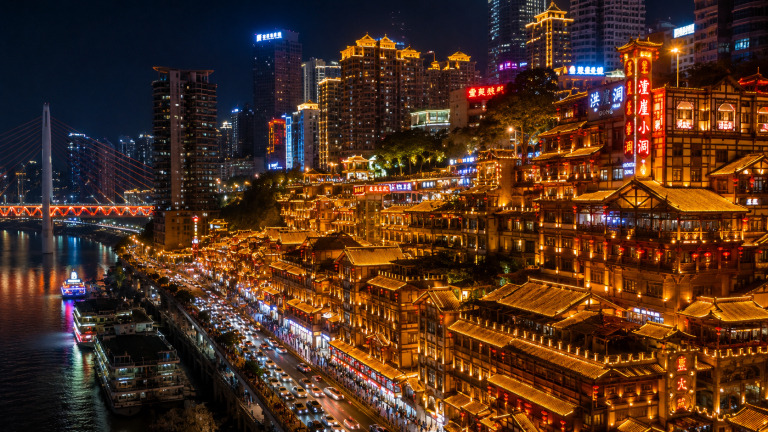
This route is designed for international visitors who have a genuine full day in the city, not a short connection between flights. It combines Ciqikou Ancient Town (磁器口古镇), Liziba Station (李子坝站), central Chongqing, the Yangtze River Cableway (长江索道) and the night view of Hongyadong / Hongya Cave (洪崖洞).
The schedule is busy but workable if you start early, travel light and are comfortable walking on slopes and stairs.
Important: Opening hours, lighting schedules, station access and transport arrangements can change. Recheck official information on the day of travel, especially during Chinese public holidays.
Is This Itinerary Realistic for Your Layover?
Use the full itinerary only when one of these situations applies:
- you arrived in Chongqing the previous evening and leave the following morning;
- you have an overnight connection with a full sightseeing day between flights;
- your scheduled layover is roughly 18 hours or longer and the flight times leave a large margin;
- you are already staying in central Chongqing and simply have one day to explore.
For a same-day international connection, build in time for immigration, baggage collection, transport back to the airport, check-in and security. A sensible personal planning buffer is to be back at Chongqing Jiangbei International Airport (重庆江北国际机场) around three hours before an international departure.
This is a conservative recommendation, not an official airport rule. Weather, immigration queues and road traffic can all reduce your usable sightseeing time.
Use the shorter route when time is limited
When you have fewer than about 10–12 usable hours outside the airport, skip Ciqikou (磁器口). Follow this shorter route instead:
Liziba Station (李子坝站) → Jiefangbei (解放碑) → Shibati (十八梯) → Yangtze River Cableway (长江索道) → Hongyadong (洪崖洞)
It is better to see four places properly than spend the day running between seven.
Visa-Free Transit: What International Travelers Need to Know
As of June 2026, China’s 240-hour visa-free transit policy applies to eligible passport holders from 55 countries. Travelers must be in transit to a third country or region and hold confirmed onward travel documents.
For example, London → Chongqing → Bangkok may qualify, while London → Chongqing → London normally does not meet the third-destination requirement.
Eligibility depends on nationality, itinerary, entry point and the latest immigration rules. Confirm your status with China’s National Immigration Administration and your airline before departure. Some nationalities may also have access to separate visa-free entry arrangements, which are different from the transit policy.
Carry your passport during the day. Hotels, ticket counters and transport operators may ask to see the original document.
One-Day Route at a Glance
| Time | Stop | Main reason to visit |
|---|---|---|
| 08:00–09:45 | Ciqikou Ancient Town (磁器口古镇) | Early-morning lanes, tea and local snacks |
| 10:30–11:15 | Liziba Station (李子坝站) | Ride and photograph the monorail through a building |
| 11:45–13:00 | Jiefangbei and Bayi Food Street (解放碑 / 八一路好吃街) | Central landmark and lunch |
| 13:15–14:30 | Shibati or Mountain City Lane (十八梯 / 山城巷) | A closer look at Chongqing’s hillside streets |
| 15:00–16:00 | Yangtze River Cableway (长江索道) | Cross the river above the city |
| 16:00–18:00 | Longmenhao Old Street (龙门浩老街) | South-bank views, a break and early dinner |
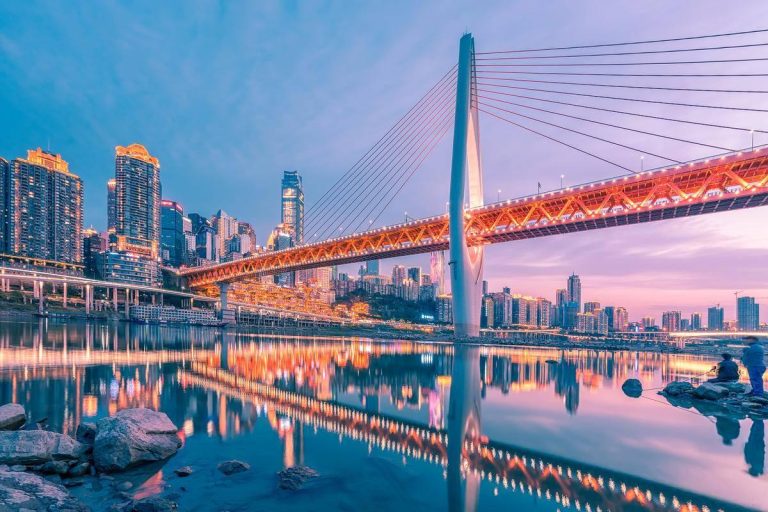
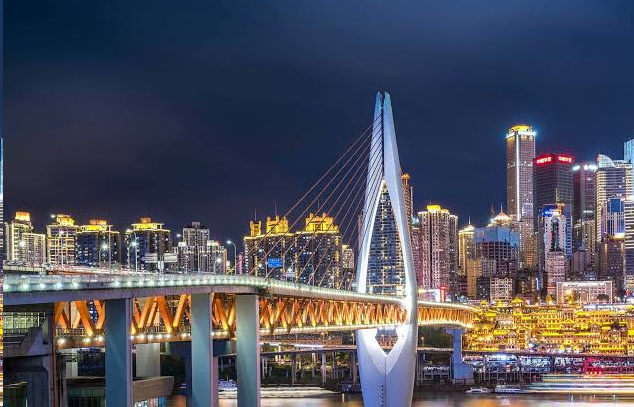
| 18:30–20:00 | Grand Theatre riverfront (重庆大剧院江滩) | Wide view of Hongyadong and Qiansimen Bridge |
| 20:00–21:30 | Hongyadong exterior (洪崖洞) | Close night view and Level 1–Level 11 cityscape |
Estimated spending: approximately RMB 200–400 per person, excluding airport transfers and shopping. The total depends mainly on taxis and whether you choose snacks, a sit-down meal or hot pot.
Before You Leave the Airport
Luggage
Do not take a suitcase on this route. Chongqing’s steps, long station passages and steep pavements make even a small wheeled case inconvenient.
The safest options are:
- use an official luggage-storage counter at the airport;
- leave bags with your hotel;
- use a staffed storage provider near a major transport hub after checking its opening time and collection deadline.
Do not rely on finding an empty locker at a specific metro station. Locker locations, availability and operating arrangements can change.
Airport transport
Metro Line 10 serves Chongqing Jiangbei International Airport (重庆江北国际机场), including the T2 and T3 station areas shown on the official network map.
The metro is usually the most predictable option during busy road-traffic periods. A taxi or ride-hailing car may be faster when roads are clear, but journey times vary considerably.
Save your return terminal in Chinese before leaving the airport.
08:00 — Ciqikou Ancient Town (磁器口古镇)
Take Metro Line 1 to Ciqikou Station (磁器口站). The old town is free to enter, though individual temples, exhibitions or activities may charge separately.
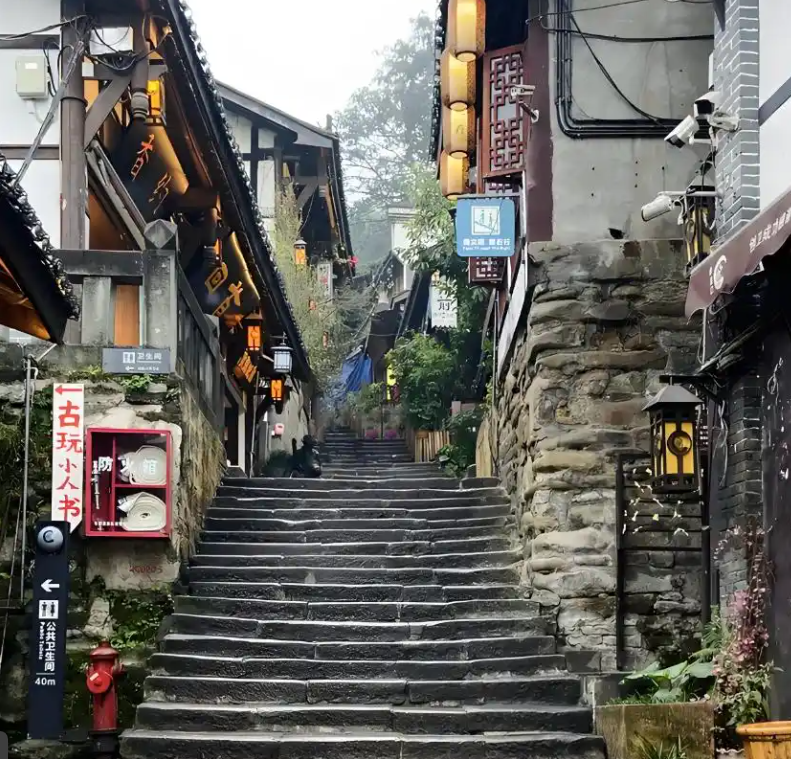
Ciqikou developed around river trade and is now one of Chongqing’s best-known historic commercial districts. Its main street becomes crowded later in the day, so the reason to arrive early is simple: the lanes are easier to walk, shopkeepers are setting up, and the atmosphere feels less like a tour-group stop.
What to do
Enter through the main area, then move away from the busiest souvenir shops into the side lanes. Walk toward the river if access is open and conditions are safe.
Good morning snacks include:
- Chen mahua, a crunchy twisted pastry (陈麻花);
- hot douhua, soft tofu with savory seasoning (热豆花);
- glutinous rice cake (糍粑);
- a bowl of Chongqing noodles (重庆小面);
- covered-bowl tea, known as gaiwan tea (盖碗茶).
Maoxuewang (毛血旺) is an important Chongqing dish, but it is a rich, spicy shared meal rather than an obvious breakfast for most overseas visitors.
What not to expect
Ciqikou is not an untouched ancient village. It is a restored and heavily visited commercial district. That does not make it worthless, but it is best approached as a lively historic neighborhood rather than a preserved time capsule.
Time needed: 1.5–2 hours.
10:30 — Liziba Station (李子坝站)
From Ciqikou, take Line 1 to Daping Station (大坪站), then change to Line 2 for Liziba Station (李子坝站).
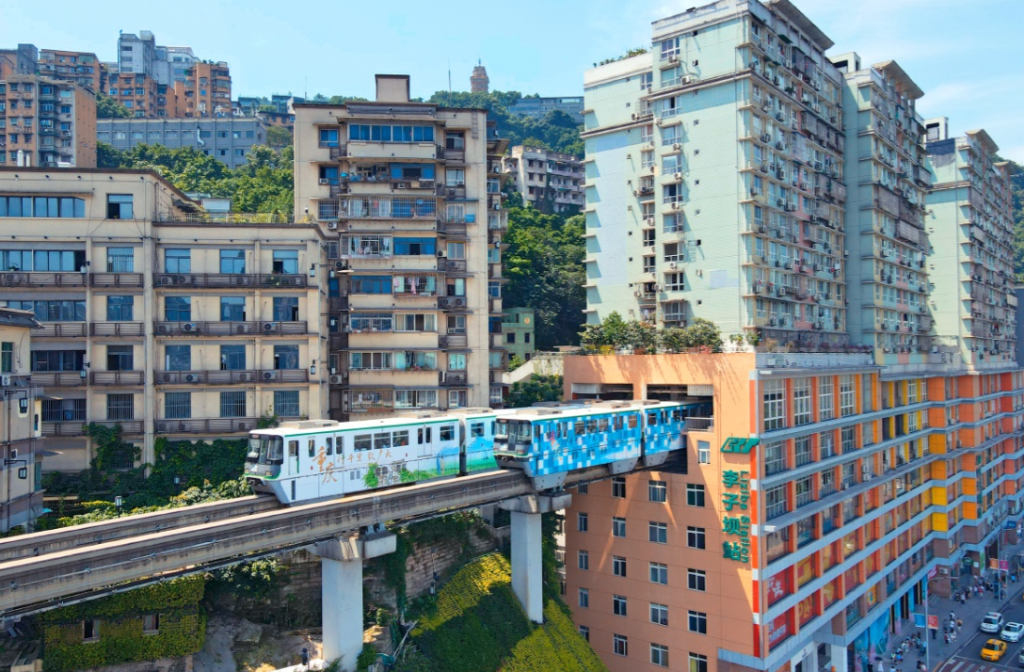
Line 2 is a straddle-beam monorail, not a conventional underground metro. Ride through the station before heading down to the viewing area; the experience from inside the train is as memorable as the photograph from outside.
The station was built together with the commercial-residential structure, with the rail alignment passing through the building. The public viewing platform below provides a safe place to watch the trains arrive and depart.
Photography and safety
- Stay inside the designated viewing area.
- Do not step into the road for a wider angle.
- Use burst mode when the train approaches the building.
- A short video often captures the movement better than a still photograph.
2026 construction notice
From 16 June 2026, renovation work at Liziba Station affects parts of the platforms, halls and exits in phases. The station remains in use, but passengers may need to follow temporary detours. Exit 3 and part of Hall B are scheduled for a period of full closure, while other areas are being renovated through late 2026.
Follow station signs and staff instructions rather than relying on an old exit guide.
Time needed: 40–50 minutes.
11:45 — Lunch at Bayi Food Street (八一路好吃街)
Continue on Line 2 to Linjiangmen Station (临江门站), then walk toward Bayi Food Street (八一路好吃街) and Jiefangbei (解放碑).
Bayi Food Street is convenient rather than subtle. It gathers many well-known Chongqing snacks into a compact commercial area, which is useful when you have only one day.
Order small portions and share when possible.
A good first-time combination
Hot-and-sour sweet potato noodles (酸辣粉): chewy noodles in a sharp, spicy broth.
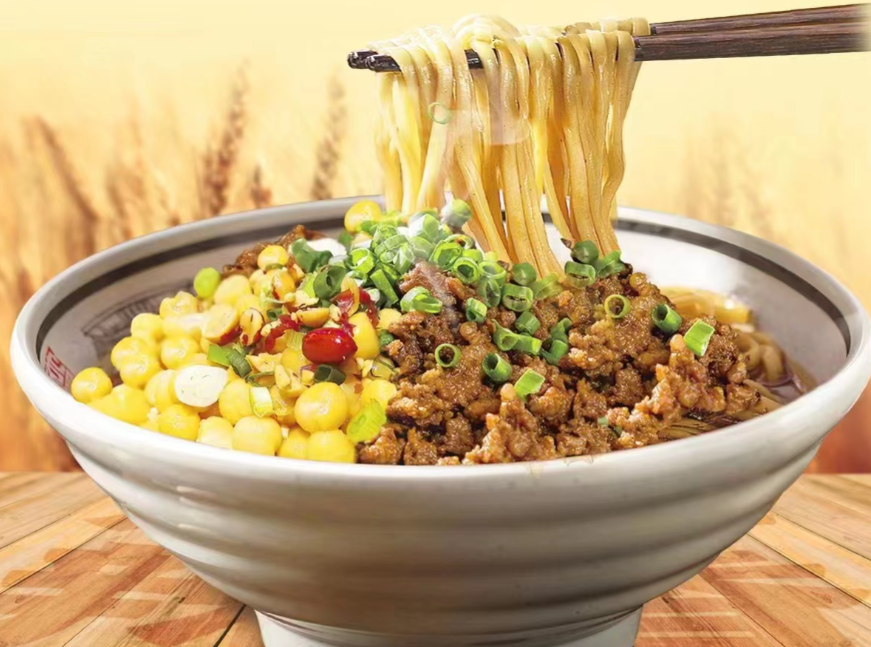
Wandou zajiang noodles (豌杂面): noodles with soft peas and minced-meat sauce. This is more filling than a snack portion.
Ice jelly (冰粉): a cool dessert with brown sugar syrup and optional toppings.
Sweet rice dumplings (山城小汤圆): small glutinous rice balls, usually served sweet.
Ask for wēi là (微辣) for mildly spicy food. Chongqing’s “mild” can still feel hot, so travelers with a low tolerance should also show the phrase “少放辣椒”—use less chili.
Well-known local names around the area include Haoyoulai Hot-and-Sour Noodles (好又来酸辣粉) and Huashi Wandou Zajiang Mian (花市豌杂面). Branches, queues and quality can vary, so treat these as options rather than mandatory stops.
12:45 — Jiefangbei Pedestrian Area (解放碑步行街)
The People’s Liberation Monument, usually called Jiefangbei (解放碑), stands at the center of Chongqing’s busiest commercial district.
The monument itself is a short stop. Its value lies in the contrast around it: an older civic landmark surrounded by high-rise offices, malls and dense pedestrian streets.
Time needed: 20–30 minutes.
13:15 — Choose Shibati or Mountain City Lane
Do not try to rush through both. They offer different versions of old Chongqing.
Option A: Shibati Traditional Scenic Area (十八梯)
Choose Shibati (十八梯) if you want:
- easy access from Jiaochangkou (较场口);
- restored buildings and organized visitor facilities;
- cafés, shops and frequent places to sit;
- a route that is simpler when time is tight.
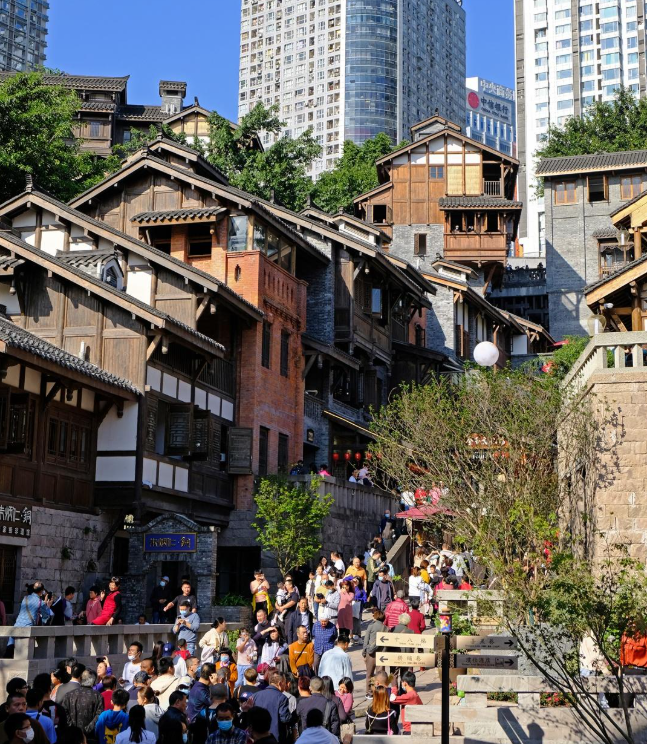
Shibati is polished and commercial, but it illustrates the steep stairways that once connected upper and lower parts of the city.
Option B: Mountain City Lane (山城巷)
Choose Mountain City Lane (山城巷) if you want:
- a longer hillside walk;
- older residential textures;
- river glimpses and irregular stone steps;
- a less formal atmosphere.
Mountain City Lane requires more effort and can be slippery after rain. The route also takes longer than it appears on a map.
What to wear
Comfortable shoes with good grip matter more than photo-friendly footwear. Chongqing’s old-city paths include slopes, steps and smooth stone surfaces. Sandals, leather soles and high heels are poor choices.
Time needed: 60–75 minutes.
15:00 — Yangtze River Cableway (长江索道)
Walk or take a short ride to the North Station on Xinhua Road (新华路). The cableway crosses the Yangtze River (长江) to Shangxinjie (上新街) in Nan’an District (南岸区).
The ride lasts only a few minutes. The queue often takes longer than the crossing, which is why it is important to check the current waiting system before you arrive.
Current practical information
- Standard adult fare: recently listed at RMB 30 one way and RMB 50 return.
- March to November: generally 08:00–22:00.
- December to February: generally 08:00–21:00.
- Public-holiday hours may be extended.
- Strong wind, maintenance or operational issues can cause temporary changes.
A one-way ticket makes sense for this itinerary because the next stop is on the south bank.
International visitors may find Trip.com easier than Chinese-only booking channels. Keep your passport and ticket QR code available.
On board
The cabins can be crowded. Do not expect an unobstructed window unless you board near the front of the queue. Enjoy the crossing even when the best photo position is already taken.
Total time including a moderate queue: 45–75 minutes.
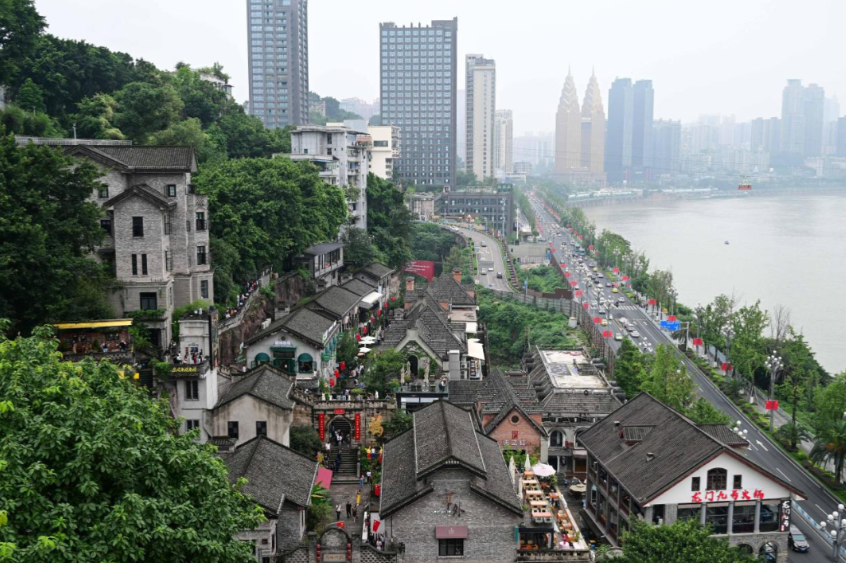
16:00 — Longmenhao Old Street (龙门浩老街)
From the South Station at Shangxinjie (上新街), continue to Longmenhao Old Street (龙门浩老街). It is close enough to fit naturally into the route and offers a better use of the late afternoon than travelling far along Nanbin Road (南滨路).
Longmenhao is a restored hillside district with terraces facing the Yuzhong Peninsula (渝中半岛). The combination of older buildings, the cableway overhead and the river below makes it a good place to slow down after a busy morning.
Use this stop for
- coffee or tea;
- an early dinner;
- sunset light over the river;
- photographs of the cableway and central skyline;
- a rest before the night-view crowds.
Dinner choices
For a one-day trip, a full hot pot meal can take two hours. Choose hot pot only if it is a priority.
Faster options include:
- Chongqing noodles (重庆小面);
- home-style dishes (家常菜);
- spicy chicken (辣子鸡);
- pork trotter soup (蹄花汤);
- grilled fish (烤鱼), if you are sharing.
If you do choose Chongqing hot pot (重庆火锅), order a split pot, called yuānyāng guō (鸳鸯锅), with both spicy and non-spicy broth.
18:15 — Travel to Chongqing Grand Theatre (重庆大剧院)
Take Metro Line 6 from Shangxinjie (上新街) toward Grand Theatre Station (大剧院站), or use a taxi if you are travelling as a group.
This route corrects a common geographical mistake: Nanbin Road (南滨路) provides excellent views of the Yuzhong skyline, but it is not the best direct viewpoint for Hongyadong (洪崖洞), which sits on the Jialing River (嘉陵江) side of the peninsula.
For the classic wide view of Hongyadong and Qiansimen Bridge (千厮门大桥), go to the riverfront near Chongqing Grand Theatre (重庆大剧院).
19:00 — Grand Theatre Riverfront (重庆大剧院江滩)
The north-bank viewpoint provides the broadest composition of:
- Hongyadong (洪崖洞);
- Qiansimen Bridge (千厮门大桥);
- the Yuzhong skyline (渝中天际线);
- reflections on the Jialing River (嘉陵江).
Arrive before the lights come on so you can choose a safe position and photograph the transition from daylight to night.
Lighting time
Hongyadong’s exterior lighting schedule changes during the year. Summer switch-on is later than winter, and the attraction may publish temporary adjustments.
As of mid-June 2026, visitors should plan around an evening switch-on close to 20:00, with lights normally remaining on until around 23:00. Check the official Hongyadong account on the day rather than relying on a fixed year-round time.
Riverfront safety
- Remain on open public paths.
- Do not climb onto wet rocks or barriers.
- Some lower areas may close because of high water, construction or crowd management.
- Bring a small light or use your phone torch when returning after dark.
- Keep camera equipment close in dense crowds.
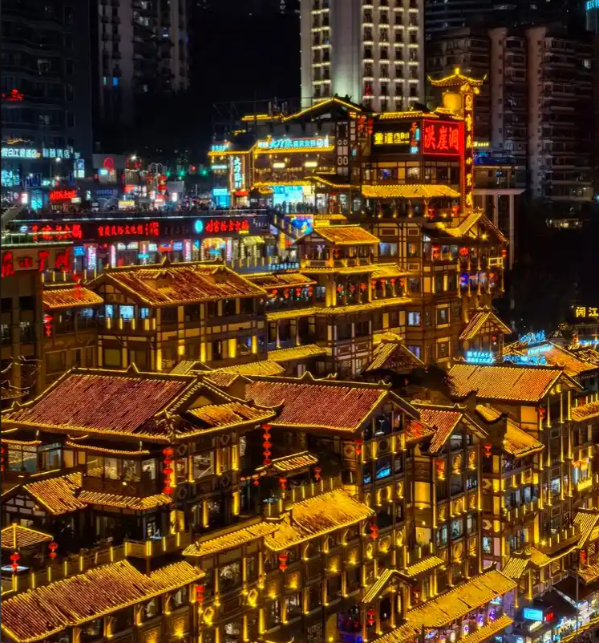
20:15 — Hongyadong / Hongya Cave (洪崖洞)
After photographing the wide view, continue to Hongyadong itself. Depending on pedestrian controls and your energy level, you can:
- cross Qiansimen Bridge (千厮门大桥) on foot when pedestrian access is open;
- take Metro Line 6 from Grand Theatre (大剧院) to Xiaoshizi (小什字);
- take a taxi to Cangbai Road near Level 11 (沧白路 / 11楼).
Hongyadong is free to enter. The interior contains restaurants, souvenir shops and entertainment venues, but the most memorable view is usually outside.
Understanding Levels 1 and 11
One of Hongyadong’s unusual features is that both Level 1 and Level 11 connect to roads. This is not a gimmick; it reflects Chongqing’s steep terrain.
Level 1: close view from the riverside road, usually crowded.
Level 11: access from Cangbai Road (沧白路), better for leaving the area and reaching Qiansimen Bridge.
Avoid “fast-track” sellers
There is no need to pay someone for a secret entrance, express route or elevator access. During busy periods, follow official signs, police instructions and crowd-control barriers.
Best time to leave
Leave before your schedule becomes tight. Metro last-train times vary by line, station and direction, so check the current journey in Amap (高德地图) or the official transit information before the evening begins.
Returning to the Airport
From central Chongqing, allow generous time for the journey to Chongqing Jiangbei International Airport (重庆江北国际机场).
Metro Line 10 is a useful airport link. Depending on your starting point, you may connect to it at stations such as Qixinggang (七星岗) or Hongtudi (红土地).
A taxi can be convenient late at night, but traffic incidents, weather and pickup delays are unpredictable. Do not calculate your return based on the fastest estimated journey shown by an app.
Confirm:
- T2, T3A or T3B;
- international or domestic departure area;
- the airline’s check-in deadline;
- whether you must collect and recheck baggage;
- whether your onward boarding pass has already been issued.
What to Skip on a One-Day Visit
This does not mean the following places are bad. They simply compete with more useful stops when time is limited.
Eling Testbed 2 (鹅岭二厂文创公园)
A pleasant creative district, but it works better on a slower two- or three-day itinerary.
Observation decks
WFC Huixianlou Observation Deck (WFC会仙楼观景台) and the Raffles City Chongqing viewpoint (重庆来福士探索舱观景台) can be worthwhile in clear weather. On a one-day route, however, they require ticketing time and remove you from street-level Chongqing.
Additional old streets
Huguang Guild Hall (湖广会馆), Danzishi Old Street (弹子石老街) and more of Nanbin Road (南滨路) are better saved for another day.
Paid attractions inside Ciqikou
Enter only when the subject genuinely interests you. Do not add several small attractions merely because they appear along the route.
Bad-Weather Version
Chongqing is often cloudy, misty or rainy. Do not build the entire day around distant views.
When visibility is poor:
- keep Ciqikou (磁器口), Liziba (李子坝) and the food stops;
- choose Shibati (十八梯) rather than a long exposed hillside walk;
- add Chongqing China Three Gorges Museum (重庆中国三峡博物馆) if it is open;
- treat Hongyadong’s close view as the main evening experience;
- skip a paid observation deck;
- check whether the cableway is operating in strong wind.
Mist can add atmosphere, but it does not guarantee a skyline photograph.
Transport and Payment Tips
Metro
Chongqing’s rail network is the most reliable way to avoid road congestion. Service hours vary by line and station, so do not describe the entire network as operating to one universal last-train time.
Useful stations include:
| Destination | Station |
|---|---|
| Ciqikou Ancient Town (磁器口古镇) | Ciqikou (磁器口), Line 1 |
| Liziba Station (李子坝站) | Liziba (李子坝), Line 2 |
| Jiefangbei (解放碑) | Linjiangmen (临江门), Jiaochangkou (较场口) or Xiaoshizi (小什字) |
| Cableway North Station (长江索道北站) | Xiaoshizi (小什字) |
| Cableway South Station / Longmenhao (上新街 / 龙门浩) | Shangxinjie (上新街), Line 6 |
| Grand Theatre riverfront (重庆大剧院江滩) | Grand Theatre (大剧院), Line 6 |
| Airport (重庆江北国际机场) | Line 10 airport stations |
Mobile payments
Alipay (支付宝) supports international bank cards for many common payments. Transport QR-code availability and verification steps can vary by account, so set it up before the sightseeing day.
Keep some cash or a physical bank card as backup. Small vendors may have limited experience with overseas cards.
Navigation
Amap / Gaode Maps (高德地图) and Baidu Maps (百度地图) usually provide more useful local routing than overseas map platforms.
Check the destination’s vertical level, not only the horizontal distance. In Chongqing, a pickup point can be directly below you but require a long walk to reach.
Useful Chinese phrases
| English | Chinese |
|---|---|
| Please use less chili | 少放辣椒 |
| Not spicy | 不要辣 |
| Mildly spicy | 微辣 |
| Where is the metro entrance? | 地铁入口在哪里? |
| Please take me to this address | 请送我到这个地址 |
| Which level is the pickup point? | 上车点在几楼? |
| I need to go to the airport | 我要去江北机场 |
| Terminal 3 | T3航站楼 |
Accessibility and Family Considerations
This itinerary is not stroller-friendly. Ciqikou, Shibati, Mountain City Lane, Longmenhao and Hongyadong all involve steps, slopes or dense crowds.
For families with toddlers, older travelers or anyone with limited mobility:
- skip Mountain City Lane (山城巷);
- shorten Ciqikou to one hour;
- use taxis for hillside transfers;
- avoid the Level 1 crowd at Hongyadong;
- view Hongyadong from the Grand Theatre side instead;
- consider skipping the cableway if standing in a crowded cabin is uncomfortable.
A reduced itinerary is not a lesser experience. Chongqing is tiring even for fit travelers.
Final Planning Advice
The biggest mistake on a one-day Chongqing visit is treating every attraction as a box to tick.
Keep the route flexible. If the cableway queue is long, skip it and take Line 6 across the river. If rain makes the hillside paths slippery, choose Shibati. If immigration takes longer than expected, remove Ciqikou rather than cutting your airport buffer.
The best parts of Chongqing are not only the headline attractions. They are the transitions between them: a monorail curving above the river, an elevator opening onto an unexpected street, the smell of chili outside a noodle shop, and the skyline appearing between old buildings.
Leave enough time to notice those moments.